Is the US Cutting Ukraine Off?
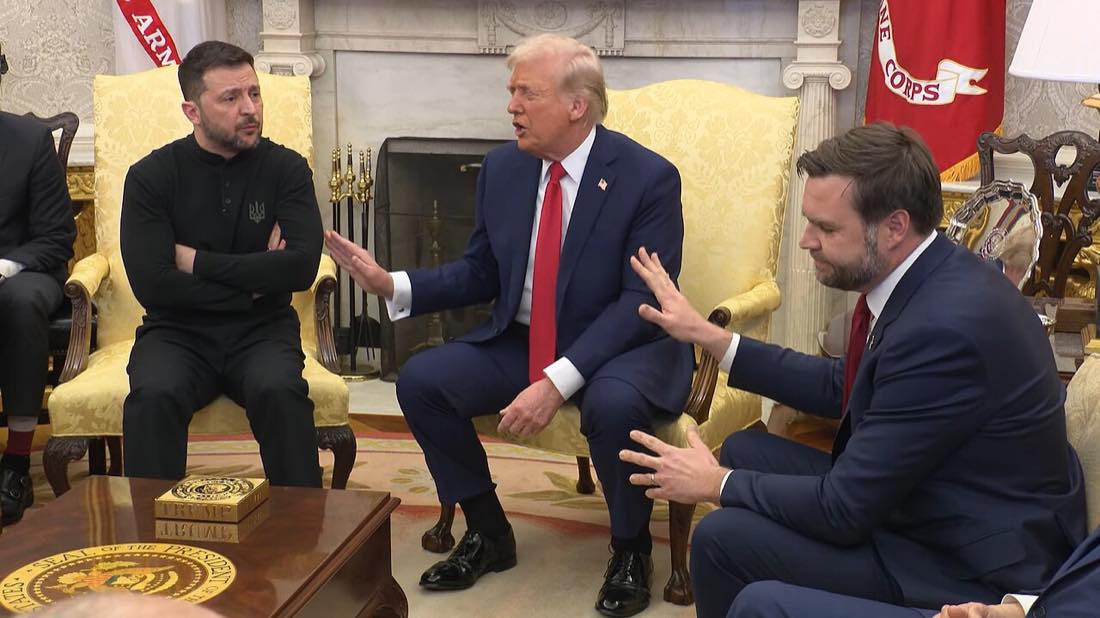

In one week of October 2026, President Trump eased sanctions on Russian diesel, called for Ukraine to get a new president, and demanded Kyiv stop striking Russian refineries. Then Kyiv got no US warning before Russian missile strikes that killed six people and cut power to 600,000 (CBS), and Ukraine's military satellite service was restricted. If Washington is now siding with Russia against Ukraine, it is a historic reversal: the United States backing a state that US law treats as an adversary and keeps under sanctions, against a country at war on the border of four NATO members. It would shake every American alliance, and it runs against most Americans, 83% of whom view Russia unfavorably (Pew), less than three weeks before the midterms. This page monitors the specific indicators of whether Washington has made an explicit decision to cut off Ukraine, and with it, erode its alliances and side with an adversary.
No official policy announcement has been made, and a broad cutoff is not shown: Trump says the US is still sharing intelligence. But we observe signs consistent with a desire for Ukraine to surrender, and one piece of US support has now been narrowed on the White House’s order: Reuters reports the order to slow Ukraine’s military Starshield service came from inside the White House (our Starlink tracker rates this Confirmed, pending a second source). Several outlets report US threats to cut intelligence and weapons purchases unless Kyiv stops striking Russian refineries, and Kyiv got no US warning before two Russian missile strikes. Trump and Elon Musk both say Zelensky should go, a line the Kremlin welcomed, while Europe’s leaders push back.
What would change this rating ↓
ukrainebetrayed.america2.newsGet America 2.0 in your inbox
Analysis of Russian influence, information warfare and the networks behind them. Free; unsubscribe anytime.
Latest reports
New reporting from major outlets and official sources, listed as it appears. Our monitoring adds headlines from major outlets automatically. "Checked" means our software fetched the full report and confirmed it supports its headline. "Reviewed" means an editor checked it against its source. "Auto" items have not been checked yet. Tap a label for our note. None of this is an endorsement. Our assessment is the rating above.
- 16 Oct, 4:25 PMZelensky turns to Europe for backing as ties with Trump deteriorate (France 24)
reviewed ▾
An editor checked this report against its source. (2026-10-16) - 16 Oct, 3:33 PMTrump denies limiting Ukraine access to Starlink network (BBC)
reviewed ▾
An editor checked this report against its source. (2026-10-16) - 16 Oct, 2:19 PMMusk asked Trump to restrict Ukraine's Starlink service, Telegraph reports (The Kyiv Independent)
reviewed ▾
An editor checked this report against its source. (2026-10-16) - 16 Oct, 1:59 PMExclusive: Musk approached Trump to slow down Starlink in Ukraine (The Telegraph)
auto ▾
Not checked yet. Listed automatically because it comes from a major outlet or official source. - 16 Oct, 1:55 PMTrump says neither he nor Musk responsible for Ukraine loss of Starlink access (Reuters)
reviewed ▾
An editor checked this report against its source. (2026-10-16) - 16 Oct, 1:18 PMTrump Says He Didn’t Order Ukraine’s Starshield Access Limits (Bloomberg.com)
auto ▾
Not checked yet. Listed automatically because it comes from a major outlet or official source. - 16 Oct, 11:41 AMStarlink access still not fully restored for Ukraine’s military, says Zelenskyy (The Guardian)
reviewed ▾
Our note: Zelenskyy said Oct. 16 that Starshield had not returned to its previous speeds but was “coming back,” citing signals from the White House.An editor checked this report against its source. (2026-10-16) - 16 Oct, 11:08 AMWhat Zelensky said in response to Trump calling oil strikes a ‘disgrace’ (The Independent)
reviewed ▾
Our note: At the EU summit Zelensky criticised the diesel deal, asked for €70 billion more, and said Starshield had improved but was not fully restored.An editor checked this report against its source. (2026-10-16) - 16 Oct, 10:51 AMZelensky hails "real leaders" in Europe, blasts Trump's diesel deal with Russia (France 24)
auto ▾
Not checked yet. Listed automatically because it comes from a major outlet or official source. - 16 Oct, 10:05 AMStarlink disruptions are being felt on the front lines of Ukraine (Reuters)
reviewed ▾
Our note: A Ukrainian artilleryman told Reuters that speeds and links to headquarters dropped after the limit; a US official denied Trump ordered a deliberate slowdown.An editor checked this report against its source. (2026-10-16) - 16 Oct, 8:17 AMTrump says Ukraine resuming strikes on Russian oil sites is a ‘disgrace’ (NBC News)
reviewed ▾
Our note: Trump told Newsmax that refinery strikes would be “a disgrace”; a senior US official said “no such request was ever made by the president” about Starshield limits.An editor checked this report against its source. (2026-10-16) - 16 Oct, 8:16 AMUS senators call for investigation into Ukraine's Starlink restrictions (BBC)
reviewed ▾
Our note: Nine US senators asked the Pentagon inspector general whether the Defense Department or its contractors caused the Oct. 12–14 Starlink speed restrictions.An editor checked this report against its source. (2026-10-16)
What's at stake
- Europe's early warning runs on US satellites. Analysts estimate the US operates 300 to 500 military intelligence satellites, against 15 to 20 for European countries, and to detect incoming attacks Kyiv “remains heavily reliant on American capabilities” (RFE/RL).
- No quick substitute. Europe has no ready-made Starlink alternative that Ukrainian soldiers could attach to their drones, Reuters reports, and for missile warning, “There is nothing equivalent in Europe” to US infrared satellites, said Marc DeVore of Chatham House. The EU's own satellite network, IRIS², is years from operating (Reuters).
- Allies are treating it as a question of US reliability. Italy's defense minister said restricting intelligence would be a “complete mistake” (BBC). Austria's chancellor cited “the volatility in U.S. policy” in refusing to put Russia's frozen assets under US control (Kyiv Independent).
- A wartime lifeline runs through one company. Ukraine's Starshield service comes under a Defense Department contract (BBC). Musk says the government sets its limits (X), and he now co-leads a Pentagon study of future warfare (TechCrunch).
- Congress has a say, and members are using it. The law requires notice to Congress within 48 hours of any decision to restrict intelligence support (NDAA, Sec. 1244). Rep. Don Bacon (R-Neb.) said reducing intel and Starlink access “equates to aiding the invader” (The Hill). Rep. Brian Fitzpatrick (R-Pa.): “Agencies won't get funding if they're not doing their jobs” (New Voice of Ukraine, citing the WSJ). After Reuters’ report, New York Republican Mike Lawler said it is not acceptable for the White House to limit Ukraine’s Starshield access and that any such decision should be “reversed immediately” (CNN). The House Ukraine Caucus co-chairs, two Democrats and two Republicans, said restrictions that put civilians in harm's way “are unconscionable and will not be accepted by Congress” (Interfax-Ukraine).
- Pressure on Kyiv comes with relief for Moscow: the diesel waiver, and a US idea to take control of Russia's frozen assets, which Europe refused (see The White House, Moscow and Europe).
What would change this assessment
The rating rises only on evidence that support was actually paused, narrowed or conditioned: an on-record statement, a document, a notice to Congress, a confirmed repeat, or major reporting that no one has disputed. Threats alone keep it at Pressure.
- not seenUS confirmation on the record that intelligence sharing was paused or narrowed, or the notice to the Armed Services and Intelligence Committees that Section 1244 requires within 48 hours of such a decision.
- partly seenMissed missile warnings, confirmed and repeated. Kyiv got no warning before Russian strikes on the nights of Oct. 12 and 13; warnings came for later waves (Kyiv Independent). A repeat after Ukraine resumed refinery strikes would be a stronger signal. On Oct. 16 Zelensky said warnings of ballistic launches still come from the United States (RBC-Ukraine).
- seenSatellite service cut or capped. Military Starshield service in motion was restricted Oct. 13–14; service below about 160 km/h has since improved, but the Defense Ministry says the limit remains (Kyiv Post). Reuters reports the order came from inside the White House, citing two US officials and a Western official; a senior US official says “no such request was ever made by the president.” Who in the White House gave it is not known (Reuters; see our Starlink tracker). Our Starlink tracker rates the White House order Confirmed on Reuters’ reporting, pending a second source.
- not seenWeapons deliveries halted or slowed under PURL, the program through which allies buy US weapons for Ukraine, shown by documents or on-record officials. A NATO official says deliveries continue (Hromadske).
- not seenA condition stated on the record by a named US official: support depends on Ukraine halting refinery strikes.
- not seenA US response to Ukraine's resumed refinery strikes (Oct. 15): any change in intelligence, satellite service or deliveries in the days that follow.
- not seenThe Graham sanctions law's first deadline, Oct. 18: whether the administration imposes the law's mandatory sanctions and secondary tariffs on Russia, or delays or waives them. A White House official says it “will comply with the act's requirements” (Newsweek).
What is actually known
- The pressure is on the record. Trump said "it's time for Ukraine to get a new president" and that Zelensky "had better damn well stop" refinery strikes (BBC). He declared an "ENERGY CEASEFIRE" on Oct. 11: "Both parties have agreed. Do not break it!" (CBS News).
- The sanctions waiver is real. Treasury's General License 135 authorizes the sale and import of Russian-origin diesel until April 7, 2027 (Euromaidan Press).
- Its legality is contested. The 2022 Ending Importation of Russian Oil Act bans Russian diesel imports and lets the president lift the ban only after consulting Congress and certifying conditions such as an end to Russia's hostilities against Ukraine. Harvard law professor Kristen Eichensehr: “none of those things have happened, and that's the main restriction in the law.” Treasury Secretary Scott Bessent: “We're doing it with all the legal authorities we have.” Rep. Brian Fitzpatrick (R-Pa.) plans a bill to block all purchases of Russian oil (TIME). 22 House members of both parties asked Trump on Oct. 15 to revoke the diesel license and fully implement the Graham law (Newsweek). The White House says the deal will lower prices, and that Trump “urges both sides of the Russia-Ukraine conflict to stop strikes against refineries” (Newsweek).
- Threats to cut intelligence and weapons purchases are reported by several outlets. The FT reported US calls to Kyiv and European capitals on Oct. 10 and 11 threatening to suspend PURL purchases and stop sharing intelligence; the White House declined to comment (Kyiv Independent, citing the FT). Two European officials told CNN the warnings came from the State Department and the Pentagon, including directly to Ukrainian commanders (CNN). The Washington Post reported a warning to Ukraine's embassy that sharing would stop "immediately" if strikes continued (Kyiv Post, citing the Washington Post).
- Zelensky confirms his military was warned. "They said this to my generals, not to me" (Kyiv Post, citing the Washington Post). He told the FT that US officials warned, "if you will not stop, we will block intelligence" (NBC News).
- No cutoff has been confirmed. Trump: "No, we haven't… We are helping them, and we are sharing intel" (CBS News). Ukrainian and American sources told the Kyiv Independent that Washington made no decision to halt sharing (Kyiv Independent). The European Commission said that, to its knowledge, no such threat had been made (Euronews).
- Two warnings were missed, and the reason is disputed. Multiple sources told CBS the US “may have intentionally withheld” them. US officials told Ukrainians the detection system failed due to “bad weather”; Ukrainian officials said they did not believe it (CBS News). Ukraine's foreign minister blamed a "special type of weaponry" (Euronews).
- There is a precedent. The US briefly cut off intelligence cooperation with Ukraine in March 2025 (Euronews).
- Senators say Americans were endangered. Nine senators, including Republicans Thom Tillis, Susan Collins, Lisa Murkowski and John Cornyn, asked the Pentagon's inspector general on Oct. 15 to investigate, writing that US diplomatic, military and security personnel “were unable to reach designated bunkers during Russian air raids, amid reported disruptions to intelligence-sharing and early-warning capabilities.” They ask whether any US official “directed, authorized, approved, or had advance knowledge” of the changes (Senate Foreign Relations Committee; New York Times).
- Congress has a tripwire of its own. Section 1244 of the 2026 defense law requires the Defense Secretary to notify the Armed Services and Intelligence Committees within 48 hours of a “decision to pause, terminate, or otherwise restrict or materially downgrade” military intelligence support to Ukraine, giving the reason, the expected duration and the impact (NDAA, Sec. 1244). The duty is triggered by a decision, so if the administration says nothing changed, no notice is due. It covers Pentagon intelligence support, not necessarily what other agencies share. Sen. Jeanne Shaheen has called on Secretary Hegseth to make that notification if anything has changed (AFP).
- Ukraine is out of Patriot interceptors, a source told CNN: “almost all the ballistic missiles from the last strike were not intercepted.” Interceptors are scarce worldwide; CNN notes that suspending PURL, the purchase program the US has reportedly threatened to halt, would threaten future shipments (CNN). On Oct. 16 Zelensky said most PAC-2 and PAC-3 interceptors have long gone to the Middle East and Ukraine is “not priority number one”; it still receives them through PURL (Fakty ICTV).
- Ukraine has called the bluff. On Oct. 15 Zelensky told the FT "the block is out. We're done," and Ukraine resumed strikes on Russian refineries (NBC News).
Elon Musk's role
Musk is part of the US position, not a bystander: he speaks in step with the White House, advises the Pentagon, and controls the satellite network Ukraine's forces depend on. What is not shown (yet) is that he ordered this month's Starshield limit.
- In step with the White House. Replying to the White House's Rapid Response account, which quoted Trump telling Zelensky he "better damn well stop" (X), Musk wrote "Zelensky has gone too far" on Oct. 10 (X). The next day: "I agree, time for Ukraine to get a new leader" (X). Hours after Starshield service was restricted: "And so the slaughter continues … Time for Zelensky to go" (X), and "Exactly what I predicted has happened," quoting a post praising his 2022 peace proposal (X).
- Inside the Pentagon. Defense Secretary Pete Hegseth named him a co-lead of Project Meridian, the Pentagon's study of future warfare, with Palmer Luckey and Newt Gingrich (TechCrunch).
- Bankrolling the midterms. Musk has given more than $276 million to Republican groups since July, making him the biggest known donor of the 2026 midterms. The largest share, $158 million, went to the Senate Republicans' main super PAC, among the largest known political donations by an individual in US history (CNBC, confirmed by his America PAC). The super PAC’s filing shows it passed both gifts, $75 million and $83 million, to Texas PAC, which backs Ken Paxton’s Senate bid in Texas, the day after each arrived (CNN, New York Times).
- His hand on the switch. “My Starlink system is the backbone of the Ukrainian army. Their entire front line would collapse if I turned it off,” Musk wrote in March 2025 (X); later that day he said Starlink would never shut off Ukraine's terminals (Kyiv Independent).
- He has used it. Reuters reported in July 2025 that Musk ordered Starlink coverage cut over parts of Kherson during Ukraine's 2022 counteroffensive; Musk has denied ever disabling terminals (Kyiv Independent, citing Reuters). In August 2026, associates of Ukraine's former defense minister told The Atlantic that Musk refused to let Ukraine use Starlink against Russian missile launchers: “Elon keeps saying it's time to make a deal” (Ukrainska Pravda, citing The Atlantic).
- Channels to the Kremlin. The WSJ reported in October 2024 that Musk had been in regular contact with Putin since late 2022, and had also spoken with Putin's first deputy chief of staff, Sergei Kiriyenko. The Kremlin said the two men had one call (Moscow Times, citing the WSJ). His father, Errol, spoke at a Moscow forum run by the institute of Tsargrad, the outlet of sanctioned oligarch Konstantin Malofeev, in June 2025 (Guardian, Meduza).
- What is and isn't shown. Musk says Starshield limits are “decided by the US military and ultimately POTUS” (X), and endorsed (“True”) a post saying the US government “made last night's call” (X). No official or document says he or SpaceX ordered the October limit, and Sen. Thom Tillis says reporting suggests it “may have occurred more locally within DOD Starshield systems” (The Hill). Reuters now reports the order came from inside the White House (Reuters). Whoever gave the order, Ukraine's front-line communications run on a network whose owner says Zelensky should go. After meeting Hegseth on Oct. 15, Britain's defence secretary, Wes Streeting, said they welcomed the service's restoration but “didn't really get into why the service interruption had happened” (Reuters).
The White House, Moscow and Europe
- Moscow welcomed Trump's push. Putin's envoy Kirill Dmitriev called Trump's intervention "iconic and historic" and said Ukraine "needs leadership actually focused on peace" (BBC).
- Europe is pushing back. At the Oct. 15 EU summit, foreign-policy chief Kaja Kallas said, "We see that we have to pressure the aggressor to stop the war, not the victim to surrender." Finland's Petteri Orpo: "Trump's and Putin's agreement is very dangerous." Denmark's Mette Frederiksen called the Starlink restriction "deeply problematic" (Kyiv Independent). After the talks, Poland's Donald Tusk told Ukrainians, "YOU ARE NOT ALONE" (X). At the same time, EU leaders plan to urge Zelensky to rein in his criticism of Trump, the Financial Times reports (FT).
- Britain is breaking with Washington's demand. The UK is sending Ukraine more Storm Shadow cruise missiles to strike Russian sites involved in attacks on civilians, and does not believe Ukraine should halt its strikes on Russia while Moscow refuses to do the same, people familiar with the matter told Bloomberg (Bloomberg).
- Europe also refused a US idea for Russia's frozen assets. US officials floated placing the roughly €200 billion held in Europe under US control as a bargaining chip in peace talks (Kyiv Independent, citing the New York Times). “The assets are frozen in Europe, and they shall remain frozen in Europe,” said Germany's Friedrich Merz; Austria's Christian Stocker cited “the volatility in U.S. policy” (Kyiv Independent).
- Europe's far right echoes the pressure. Alice Weidel, co-leader of Germany's Alternative for Germany (AfD), says Ukraine has “already lost” against Russia and should sue for peace, and would end German support for Ukraine, she told The Economist (The Economist).
- Moscow’s nationalist media wanted it switched off. By Sept. 29, two weeks before the limit, Tsargrad, the outlet of US-sanctioned oligarch Konstantin Malofeev, ran a column titled “Let’s turn off Starlink,” arguing it must be “turned off for everyone, and above all for” Ukraine’s armed forces and that “it is not hard to put pressure on Musk” (Tsargrad, archived; our translation). Tsargrad’s institute hosted Elon Musk’s father, Errol, at its Moscow forum in June 2025, and its channel interviewed him (Guardian, Meduza). Nothing shown links the column to whoever ordered the limit.
- Bottom line. Musk and the White House are pressing the same message against Zelensky, Moscow has welcomed it, and Europe's leaders oppose it. The alignment is documented; whether it reflects coordination is not.
Our assessment
- No official policy announcement has been made, and a formal cutoff is not yet shown.
- We observe signs consistent with a desire for Ukraine to surrender: threats tied to refinery strikes, missed missile warnings, a Starshield slowdown that Reuters reports the White House ordered, and calls from Trump and Musk for Zelensky to go that the Kremlin welcomed.
- At minimum, this is an effort to pressure Ukraine. At worst, it is a prelude to aligning with Russia against Ukraine, and with it against Europe: a functional rupture in NATO and a serious security crisis.
- The politics. This runs against public opinion less than three weeks before the Nov. 3 midterms. In a March Pew survey, 83% of Americans viewed Russia unfavorably, two-thirds were not confident in Trump's decisions on the war, and only 20% said the US gives Ukraine too much support. Even among Republicans, 47% call Russia an enemy (Pew Research Center). Six Republican senators have joined six Democrats in demanding that Trump rescind the diesel deal (NPR).
- What would show which: see What would change this assessment.
How it's being read
The facts above are read in sharply different ways. The readings differ on motive; our rating tracks only what can be shown, whether support was actually withheld.
- The White House: forcing a deal. Trump: “I think, actually, Putin wants to make a deal more than Zelensky.” On an energy ceasefire both sides said they had not agreed to: “They agreed because I said they agreed” (X).
- The gas-price case. Trump blames rising diesel prices on the war (CNN). US diesel averaged $6.18 a gallon on Oct. 12, up 69% in a year (EIA), as Ukraine hit Russian refineries and Iran and the Houthis hit Middle East supply. Goldman Sachs estimates the Russian diesel would cut wholesale prices by $1 to $2 a barrel, and the whole deal equals about 10 days of US demand (CNBC).
- Moscow: Kyiv is the obstacle. Kremlin spokesman Dmitry Peskov said Ukraine “is coming into serious conflict with the peace efforts of the United States” (France 24).
- Ukraine's press: not pressure but help for Russia. The Kyiv Independent's editors: “Trump is not trying to reach a deal — he is trying to ‘end the war’ by simply helping Russia win” (Kyiv Independent).
- A former US commander: abandonment. Retired Gen. Ben Hodges, who commanded US Army Europe, told BBC News Ukraine at the Warsaw Security Forum that the US had abandoned Ukraine, and that Europe can and must help (Gordon, citing BBC News Ukraine; translated from Ukrainian).
- Conservative critics: not the weather, and not neutral. Tom Rogan in the Washington Examiner on the “bad weather” explanation for the missed warnings: “That excuse is laughable… Washington, not weather, is the problem here” (Washington Examiner). Jay Nordlinger, invoking Reagan, in The Next Move: “Do the Ukrainians know that we are on their side? I doubt they do. Moreover—are we?” (The Next Move).
- The Wall Street Journal’s editorial board: back a GOP trade. It urges Trump to back a deal that Republican Sens. Roger Wicker and Kevin Cramer proposed to Zelensky in Kyiv on Oct. 9, rather than pressure (WSJ, opinion).
- American critics: a lifeline for Putin. David French in The New York Times: “the president of the United States is throwing Vladimir Putin a lifeline” (New York Times).
Claims in circulation
The most-shared claims, and what public sources can confirm.
ConfirmedTrump wants Zelensky replaced
DisputedThe US has cut off intelligence to Ukraine
Origin. The missed warnings before strikes on Kyiv on Oct. 12 and 13; Zelensky said Kyiv "received no early warning from our partners" (Kyiv Independent).
What the evidence shows. Warnings came for later waves (Kyiv Independent). Trump says the US is "sharing intel" (CBS News), and Ukrainian and American sources say no decision to halt was made (Kyiv Independent). Multiple sources told CBS the US “may have intentionally withheld” the warnings, while US officials blamed “bad weather” (CBS News). US officials blamed the weather when Kyiv asked, CNN reports; “America says it was a failure,” a European official said. “But it can’t be the truth” (CNN).
Bottom line. Two missed warnings are real; a deliberate cutoff is alleged but not shown.
DisputedUkraine has already lost the war
Origin. AfD co-leader Alice Weidel says Ukraine has “already lost” and should sue for peace (The Economist).
What the evidence shows. Ukraine reports liberating 16 settlements and more than 100 square miles in Donetsk in its “Operation Vivaldi” counteroffensive, and analysts at the Institute for the Study of War say Russia has had to shift troops to contain it (Atlantic Council). “The Kremlin's plan to seize the Donbas region will not be implemented in the foreseeable future,” says Andrii Biletskyi, whose units lead the offensive (Atlantic Council).
Bottom line. The war is not decided; recent fighting has gone Ukraine's way in Donetsk.
LikelyThe US threatened to cut intelligence and weapons purchases unless Ukraine stopped hitting refineries
Origin. The FT, CNN and the Washington Post, citing European, Ukrainian and US officials (Kyiv Independent, citing the FT; CNN; Kyiv Post, citing the Washington Post).
What the evidence shows. Three outlets with separate sources, and Zelensky on the record that his generals were warned (Kyiv Post, citing the Washington Post). The White House declined to comment; no named US official has confirmed it. The Washington Post reports that Gen. Alex Grynkewich, the top US and NATO commander in Europe, was among the officials who passed on the request to stop refinery strikes, citing two anonymous sources. A Ukrainian security adviser said Kyiv read it as a warning that Washington “could cut intel and everything going under PURL if you don't stop,” but added: “The Americans are saying that they are not threatening” (Washington Post).
Bottom line. Well sourced, not confirmed by Washington.
OverstatedThe US is lifting sanctions on Russia's shadow fleet
Origin. Posts citing a Financial Times report say the administration may lift sanctions on Russian and Iranian “shadow fleet” tankers, letting them sail “without any restrictions,” to bring down diesel prices before the midterms (X).
What the evidence shows. A US official told Reuters on Oct. 14 the idea is to lift sanctions on individual tankers so they can be sold to legitimate operators, with Treasury approval, and carry oil that isn't sanctioned; they could not carry Russian or Iranian oil still under US sanctions. No decision has been announced (Reuters via Marine Insight).
Bottom line. Under consideration, case by case, and narrower than the posts say. Watch for a Treasury action.
OverstatedUkraine's refinery strikes are driving up US gas prices
Origin. Trump blames rising diesel prices on the war (CNN); a pro-Trump influencer with 2.3 million followers says Zelensky is “sabotaging global gas prices right before our midterms” (X).
What the evidence shows. US diesel averaged $6.18 a gallon on Oct. 12, up 69% in a year (EIA), as Ukraine hit Russian refineries and as Iran and the Houthis hit Middle East refineries and disrupted exports through the Strait of Hormuz. The US is a net diesel exporter, and Goldman Sachs estimates the Russian diesel would cut wholesale prices by $1 to $2 a barrel (CNBC).
Bottom line. Ukraine's strikes are one cause among several, and the Russian diesel deal does little for US prices.
OverstatedUkraine can simply replace Starlink with European satellite terminals
Origin. Posts after the restriction, such as one by Ukrainian commentator Mykhailo Rohoza, seen about 52,000 times: “If Starlink disappears, Ukraine will replace it with European satellite internet terminals” (X).
What the evidence shows. Europe “does not have a ready-made alternative” that soldiers could attach to their drones. Consultant Christian von der Ropp says OneWeb's “capacity and performance constraints, combined with the cost, weight, bulk and power consumption of its user terminals, limit its suitability for frontline applications,” and switching would mean replacing thousands of terminals. European Defence Commissioner Andrius Kubilius says Europe is “quite dependent on American space capabilities” (Reuters).
Bottom line. European systems can cover some needs, but nothing can replace Starlink at the front soon.
UnconfirmedTrump cut Ukraine's Starlink
Origin. Alex Jones, to 4.4 million followers, Oct. 14: “Why Trump Cut StarLink Feeds Across Ukraine,” citing an interview with Russian lawmaker Viktor Bout (X); the next day: “Hours After Trump Turned Starlink Back On” (X).
What the evidence shows. Military Starshield service, provided under a Defense Department contract, was speed-capped Oct. 13–14 (BBC). Musk says limits are set by “the US military and ultimately POTUS” (X). White House sources deny involvement (Meduza). Nine senators, led by Jeanne Shaheen and Thom Tillis, have asked the Pentagon's inspector general to investigate (Senate Foreign Relations Committee).
Bottom line. The cap was real and the government's to set; who ordered it is not shown.
No evidenceTrump colluded with Russia to drop Ukraine's air defenses to lower gas prices
Origin. Miles Taylor, former Homeland Security chief of staff: "Trump may have colluded with Russia to drop Ukraine's air defenses, all to lower gas prices before a midterm" (X). A German commentator with 121,000 followers suggested Trump "informed Putin about his betrayal of Ukraine well in advance" (X).
What the evidence shows. The diesel deal came out of a Trump–Putin call, by Trump's own account (AP/PBS). Kyiv missed two US missile warnings (Kyiv Independent), and sources told CBS the US may have withheld them on purpose (CBS News). No evidence links the missed warnings to Russia or to the call, and Ukraine's air force says warnings arrived for later waves (Kyiv Independent).
Bottom line. The pressure is real; collusion with Russia over air defenses is not shown.
FalseRussian diesel is already arriving in the US
Origin. A day after Trump announced the diesel deal on Oct. 9, a pro-Russian X account said the tanker Minerva Zen was carrying nearly 280,000 barrels of Russian diesel to the US; the claim drew more than 570,000 views (France 24).
What the evidence shows. The Minerva Zen left St. Petersburg on Sept. 23 and docked in Wilmington, N.C., on Oct. 11–12, at a terminal for agricultural and chemical cargo. TankerTrackers and Vortexa say it carried fertiliser (urea ammonium nitrate), which US sanctions never banned, and its owner told local TV the same (France 24). US diesel was $6.18 a gallon on Oct. 12, two cents lower than the week before the deal (EIA).
Bottom line. The first “Russian diesel” tanker carried fertiliser. As of Oct. 16 we have seen no credible report of Russian diesel landing in the US.
FalseBiden gave Ukraine “massive amounts” of Tomahawk missiles
Origin. Trump, blaming low US weapons stocks on Ukraine rather than the Iran war: Biden gave Zelensky “massive amounts of patriots, of tomahawks, of everything. And they didn't make them pay” (video via WSJ correspondent Yaroslav Trofimov, X).
What the evidence shows. The US has never sent Ukraine Tomahawk cruise missiles. Zelenskyy asked Biden for them in October 2024 and Trump in September 2025; Trump turned the request down on Oct. 17, 2025, saying the Pentagon could not spare its limited stocks (Arms Control Association).
Bottom line. No Tomahawks went to Ukraine under Biden or Trump.
MisleadingZelensky refuses to hold elections
Origin. Repeated after Trump said it was time for Ukraine to get “a new president” (BBC).
What the evidence shows. Ukraine is under martial law, which bars elections (BBC). Zelensky: “From the point of security, you can't do elections”; he says they could go ahead under a full 60-day ceasefire (Euromaidan Press).
Bottom line. Ukrainian law bars wartime elections, and Zelensky has named the conditions for holding them.
No evidenceUS weapons for Ukraine have been halted
Origin. Inferred from the reported threat to suspend PURL (Kyiv Independent, citing the FT).
What the evidence shows. A NATO official says PURL deliveries continue (Hromadske). No report of an actual halt. The US ambassador to NATO, Matthew Whitaker, on Oct. 12: “I know of no change to that program” (Kyiv Post, citing AFP).
Bottom line. No evidence of a halt so far.
What to watch next
- Oct. 18: what the administration implements, delays or waives under the Graham sanctions law (Newsweek).
- Any US move after Ukraine's resumed refinery strikes: another missed warning, a new Starshield limit, or a PURL slowdown.
- Whether the Pentagon sends Congress the 48-hour notice, or Congress says it has received none.
- A named US official on the threat, or the White House answering whether intelligence sharing has changed.
- The inspector general's response to the senators' Oct. 15 request (Senate Foreign Relations Committee).
- Ukraine's air force: whether warnings arrive before the next ballistic strikes.
Timeline
- Mar. 2025The US briefly cuts off intelligence cooperation with Ukraine (Euronews).
- Oct. 9Treasury issues General License 135, allowing Russian diesel sales and imports until April 2027 (Euromaidan Press). US officials float placing Russia's frozen assets in Europe under US control (Kyiv Independent).
- Oct. 10Trump says "it's time for Ukraine to get a new president" (BBC). US officials call Kyiv and European capitals threatening to suspend PURL purchases and intelligence, the FT reports (Kyiv Independent, citing the FT).
- Oct. 11Trump declares an "ENERGY CEASEFIRE" (CBS News). Warnings from the State Department and the Pentagon reach Ukrainian commanders, CNN reports (CNN).
- Oct. 12Russian S-400 missiles hit Kyiv with no advance warning (Kyiv Independent). A NATO official says PURL deliveries continue (Hromadske).
- Oct. 13The first wave of a second strike arrives without warning; later waves are warned (Kyiv Independent). Trump: "we are sharing intel" (CBS News).
- Oct. 13–14Military Starshield service in motion is restricted (see our Starlink tracker). Shaheen calls on Hegseth to notify Congress of any change (AFP).
- Oct. 14The Washington Post reports a warning to Ukraine's embassy that sharing would stop "immediately" (Kyiv Post, citing the Washington Post).
- Oct. 15Starshield service partly restored, a Defense Ministry source says. Zelensky: "We're done," and Ukraine resumes refinery strikes (NBC News). Ukraine is out of Patriot interceptors, a source tells CNN (CNN). EU leaders refuse the US idea for Russia's frozen assets (Kyiv Independent). Britain's defence secretary, Wes Streeting, says he and Hegseth welcomed the Starlink restoration at the Pentagon; no explanation was given (Reuters).
- Oct. 16Zelenskyy says Starshield has improved but is not back to its previous speeds: “Have they returned to the previous speed limits? No. But is it coming back now? Yes.” He cites “signals from the White House” that the capability will return (Guardian). A Ukrainian artilleryman tells Reuters that speeds and links to headquarters dropped when the limit hit (Reuters).
Key sources
- Kyiv Independent, citing the FT: US threatens to halt weapons procurement and intelligence (Oct. 11)
- CNN: US warns Ukraine over refinery strikes (Oct. 11)
- Kyiv Post, citing the Washington Post: the embassy warning (Oct. 14)
- Kyiv Independent: missiles slip through without warning; sharing "remains intact. For now" (Oct. 12)
- CBS News: Trump denies a cutoff; "bad weather" explanation (Oct. 13)
- NBC News: "We're done": Ukraine resumes refinery strikes (Oct. 15)
- Atlantic Council: what the defense law requires on Ukraine intelligence